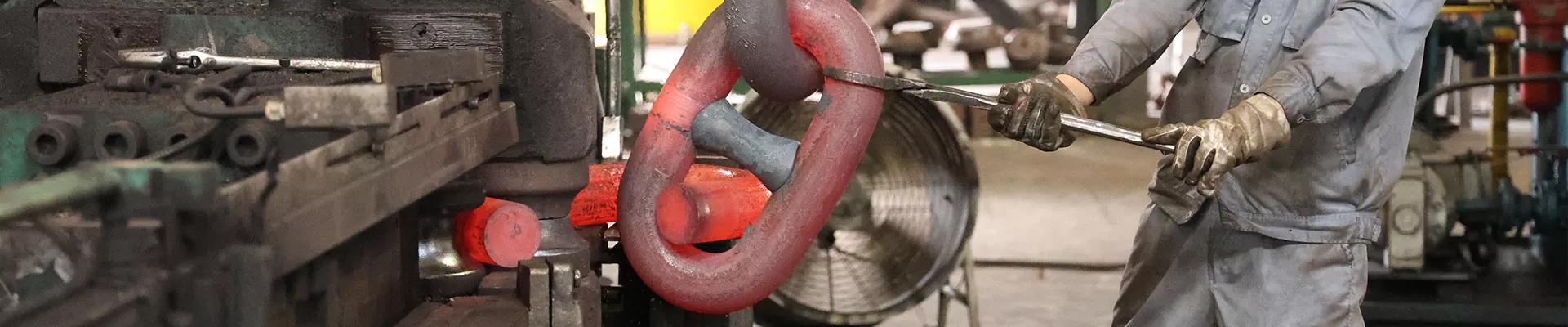
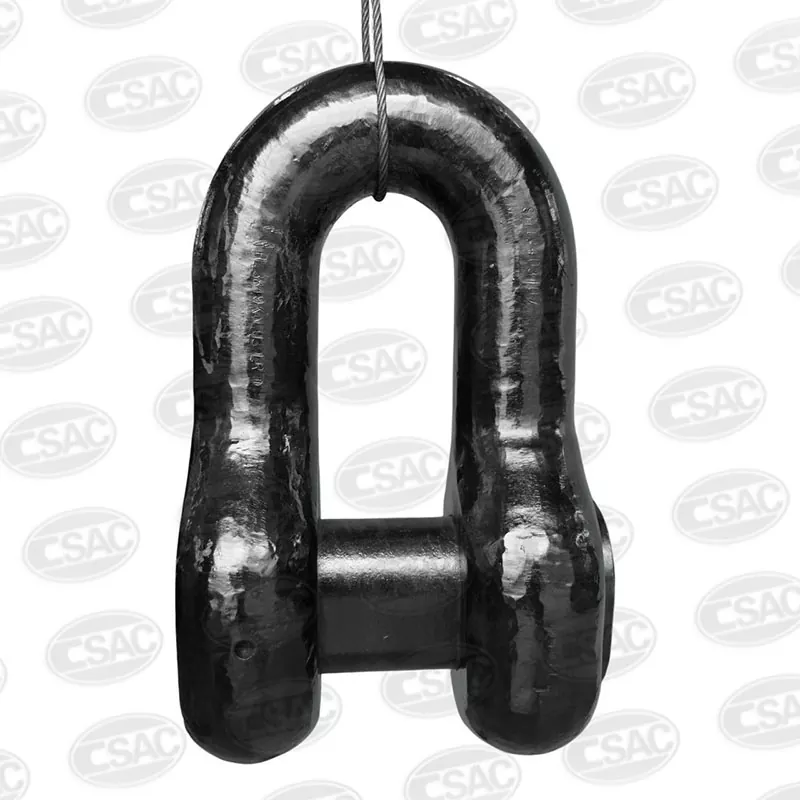
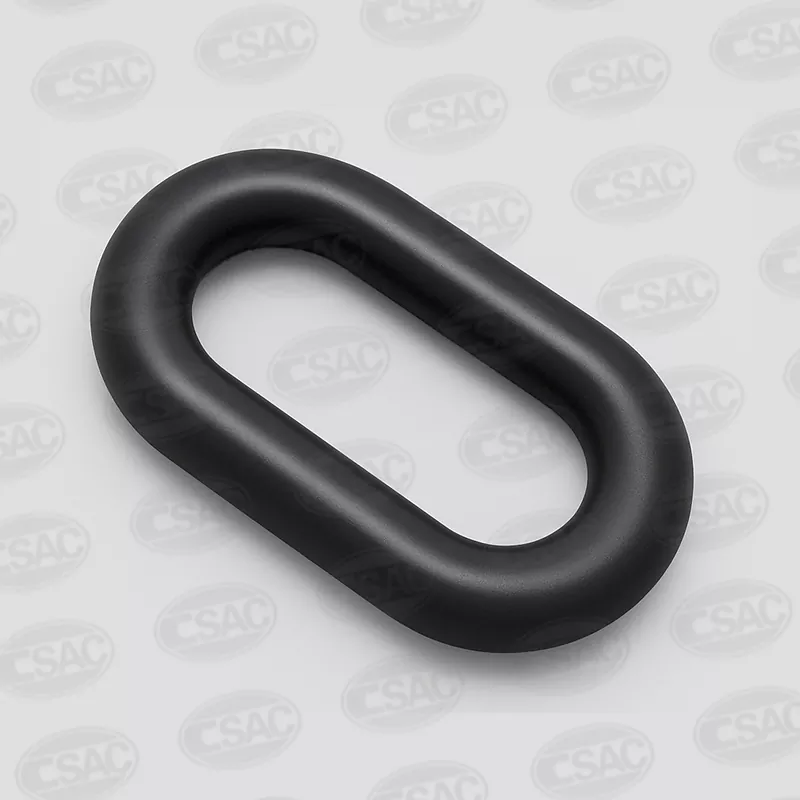
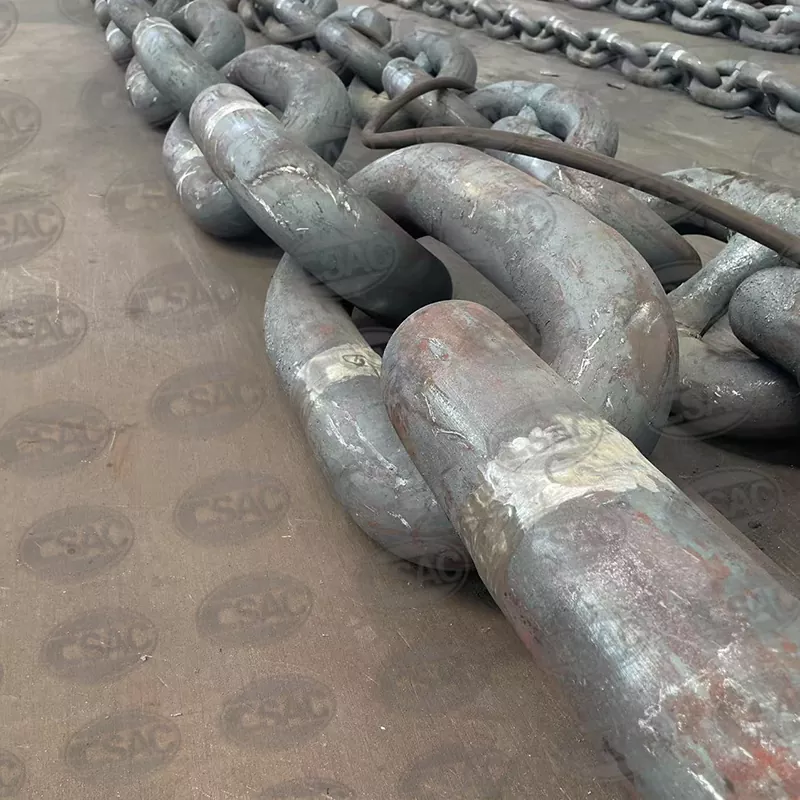
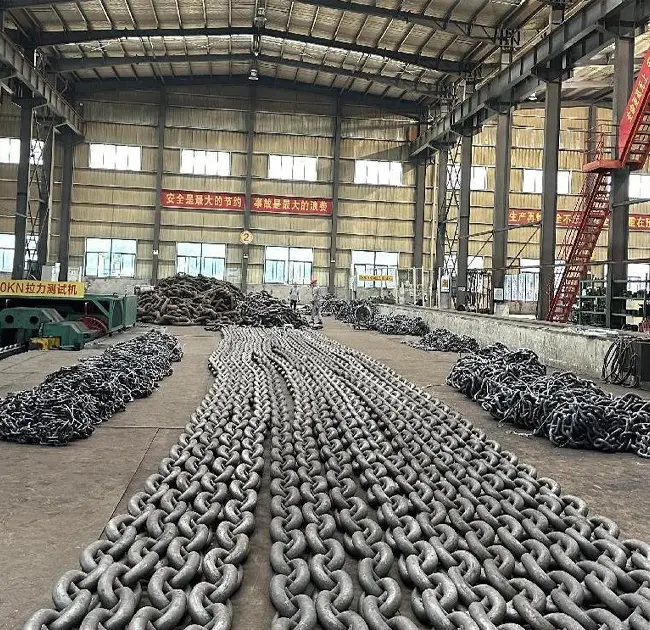
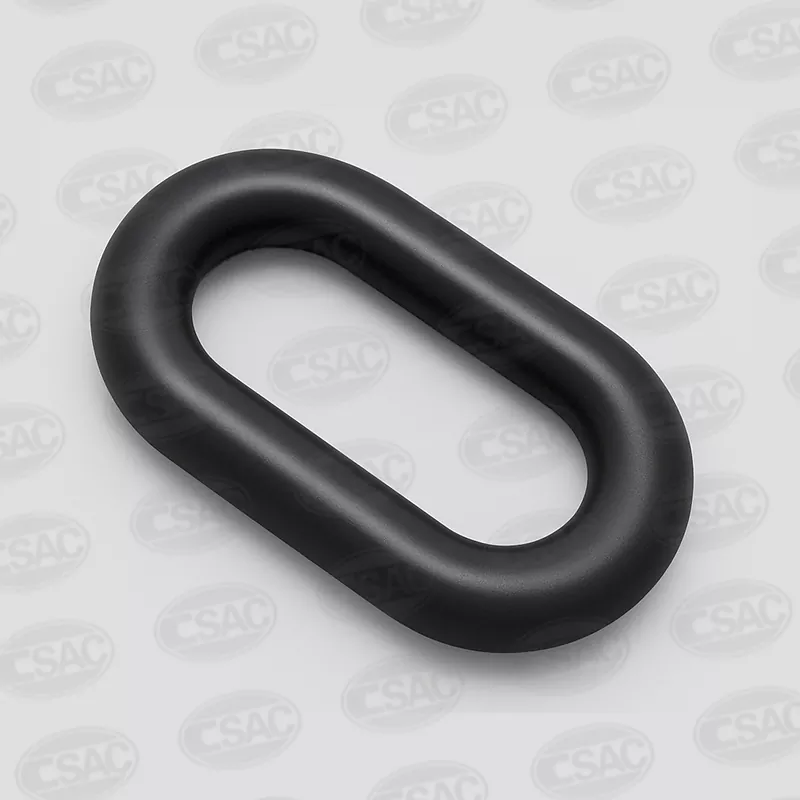
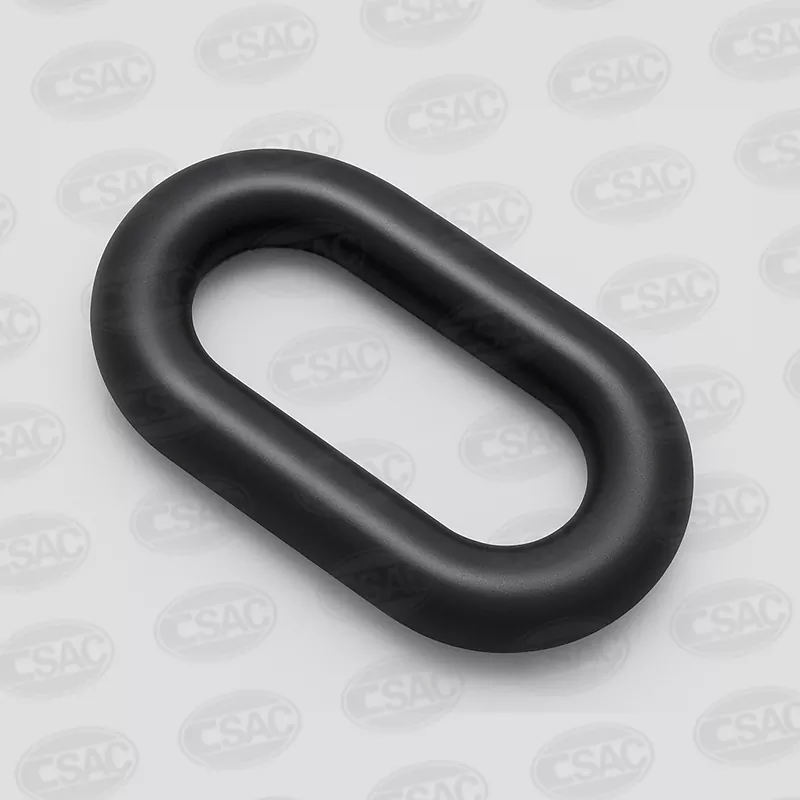
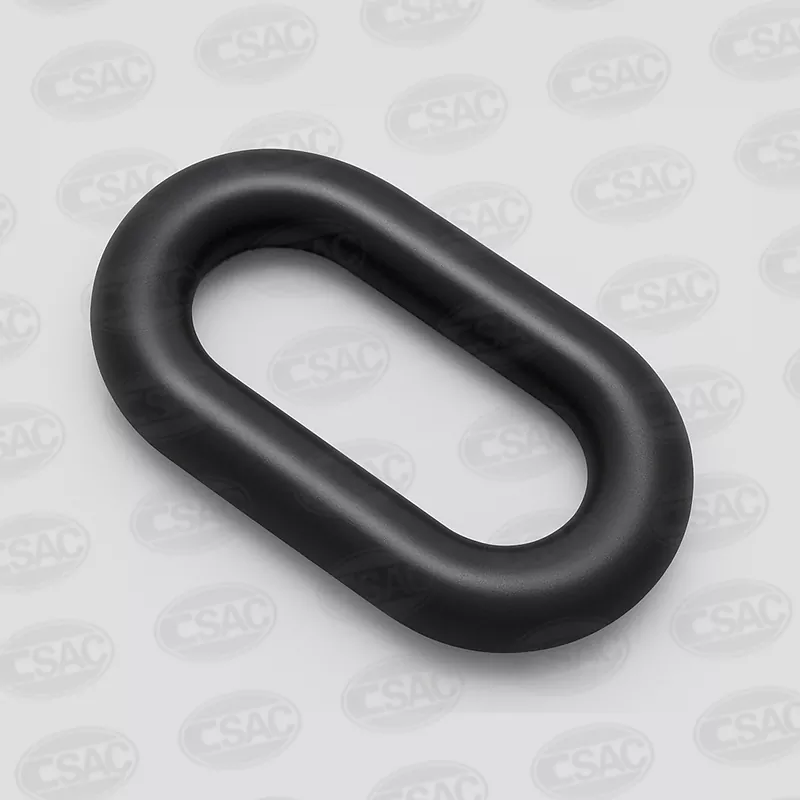
Mooring chain is a heavy-duty steel chain used to secure vessels, offshore platforms or floating assets in position on the sea floor. It serves a dual role: first, absorbing and distributing forces from wind, waves, current and tide; and second, ensuring stable station-keeping under variable marine conditions.
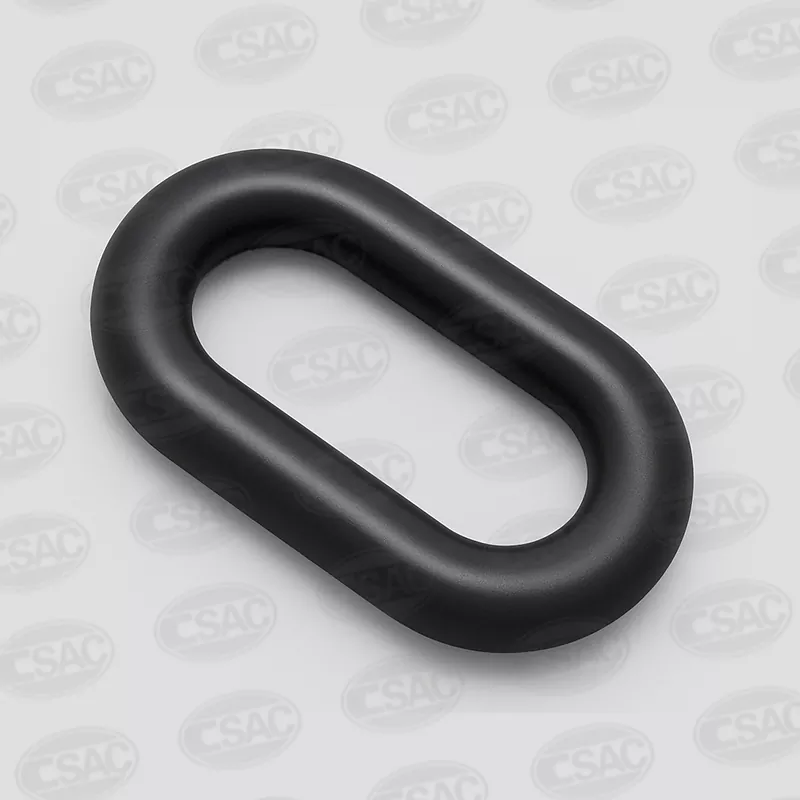
A mooring chain is essentially a series of interlinked steel chain links (studless or studlink) that form the mooring line from the floating asset’s fairlead or bow to the anchor on the seabed. It must meet high strength, fatigue, corrosion, abrasion and dynamic load performance requirements.
Key parameters for a typical high-grade mooring chain may include (but are not limited to) the following:
| Parameter | Typical Value / Description |
|---|---|
| Nominal link diameter (d) | e.g., 100 mm, 127 mm, 137 mm (for large floating offshore applications) |
| Breaking load (BL) | Defined by classification standards, depends on grade of chain (R3, R4, R5 etc) |
| Unit mass per metre (m) | For studless chain: m ≈ 19.9 d² (te/m) according to link diameter in metres |
| Young’s modulus (E) | Typical values: 5.44×10⁷ kN/m² for studless; 6.40×10⁷ kN/m² for studlink chain |
| Chain length (L) | Depends on water depth, scope, catenary design. For example a 10 MW semi-submersible in 44 m depth used chain lengths ~ 650 m. |
| Fatigue life / service condition | Must be verified under dynamic loads, sea state, chain wear, abrasion at seabed contact |
By way of example, a manufacturer might supply a studless mooring chain of nominal diameter 127 mm, unit mass ~0.353 t/m (from study).
High strength and durability – Mooring chains are designed to endure heavy dynamic loads (from wind, waves, current) and provide a robust link between floating asset and seabed. They are favoured over synthetic lines in harsh or long-term environments.
Scope and energy absorption – A properly designed chain length (scope) creates a catenary shape, providing both weight and horizontal restoring force. For example, longer chain acts as a damper to shock loads.
Cost-effectiveness and life-cycle – While the up-front cost of heavy chain is high, its service life, low maintenance (compared to other mooring systems), and reliability make it a sound investment. For offshore floating wind turbines the mooring chain cost is a major but justified portion of the system.
Wear and maintenance awareness – Wear often concentrates in the “chafe section” where the chain lies on the seabed and undergoes motion-induced abrasion. Regular inspection is needed.
Future readiness – As offshore installations move to deeper water and floating platforms increase capacity, chain diameters, lengths and fatigue endurance escalate. Parameter sensitivity studies show length has a major effect on dynamic response.
Thus the mooring chain is not simply “heavy chain” but a finely engineered component whose correct specification greatly influences operational safety, cost and longevity.
Begin by establishing environmental loads (wind, wave, current), water depth, seabed conditions and motion envelope of the floating asset. Use catenary mooring theory to determine required chain length, diameter, weight per metre, anchor load, safety factors. For example: chain length and nominal diameter affect tension, stiffness, lying-section behaviour.
Select chain grade (e.g., R3, R4), link-type (studless for many moorings), finish (coatings, galvanising, corrosion allowance). Check manufacturer data for unit mass, breaking load, modulus.
Deploy chain in segments, secure to anchor and vessel fairlead. Provide correct chain scope (often 2 × -3 × water depth depending on site). Ensure the lying section on the seabed is sufficient to absorb movement; too short may lead to sudden shock loads, too long may reduce restoring stiffness.
Monitor chain length, tension, orientation, seabed contact. Use measurement methods (calipers, photogrammetry) to gauge link elongation or wear.
Establish inspection program. Key areas: link elongation, corrosion penetration, wear at seabed contact, fatigue cracking. Replace or refurbish chain as required.
Slack-taut effect in shallow water: a chain that is too long may be slack and cause excessive motion; too short may lead to high pre-tension and reduced safety margin. Sensitivity analysis shows length dominates.
Wear zones: The chafe section (where chain touches seabed) suffers abrasion; monitoring is needed.
Corrosion and fatigue: Particularly in marine environment, maintenance and protective treatments are key.
Improper scope: If chain scope is not appropriate (length vs water depth vs forces) then mooring performance degrades.
With the expansion of floating wind, deeper water oil & gas fields, and increased demands for station-keeping reliability, mooring chains are evolving. Key trends include:
Increase in nominal diameters and unit mass as water depths and platform sizes grow. For example, studies show moving from 117 mm to 137 mm improves safety margin.
Advanced material grades and fatigue-resistant steels to extend service life under dynamic loads.
Improved measurement and monitoring technologies for chain inspection (optical calipers, photogrammetry) for better life-cycle management.
Greater understanding of chain-length vs dynamic behaviour (sensitivity analysis) enabling smarter design to reduce costs while maintaining safety.
Integration with real-time monitoring systems (tension sensors, wear sensors) enabling predictive maintenance and reduced downtime.
Sustainability: considering corrosion allowances, recyclability of chain steel, and cost-effective refurbishment versus replacement.
Therefore choosing a high-quality mooring chain supplier now not only ensures present performance but also future-proofing for evolving marine assets.
Common Questions About Mooring Chains
Q1: What diameter of chain should be selected for a given water depth and platform size?
A1: The diameter depends on the expected loads (breaking load, fatigue life) as defined by classification rules and the asset’s movement envelope. For example, studies show that increasing the nominal diameter reduces horizontal motion of the floating platform under rated and extreme conditions.The designer should evaluate water depth, current, wave conditions, expected fairlead loads, and choose a diameter with adequate safety factor.
Q2: How often should a mooring chain be inspected and what are the key inspection points?
A2: Inspection frequency depends on environment and asset criticality. Key inspection points include link elongation, wear at seabed contact, corrosion penetration, fatigue cracks, and anchor point condition. Wear is often concentrated in the chafe section.A typical annual or bi-annual inspection supplemented by in-service monitoring is advisable for critical moorings.
In conclusion, a well-specified, properly installed and maintained mooring chain is a foundational component of any marine mooring system. It ensures safety, reliability, and long-term value for floating assets. In this context, the high-quality mooring chains offered by Zhongnan Anchor Chain Co., Ltd. provide a robust solution for current and future station-keeping demands. For more detailed specification support or to explore customised chain solutions, please contact us.
Phone: +86-580-3695396
Mobile: +86-13968286968
E-mail: allsales@znmlzz.com
Address:No. 10 Xinhui Road, Zhanmao Street, Putuo District, Zhoushan City, Zhejiang Province, China
Copyright © 2025 Zhoushan Zhongnan Anchor Chain Co., Ltd. All Rights Reserved.